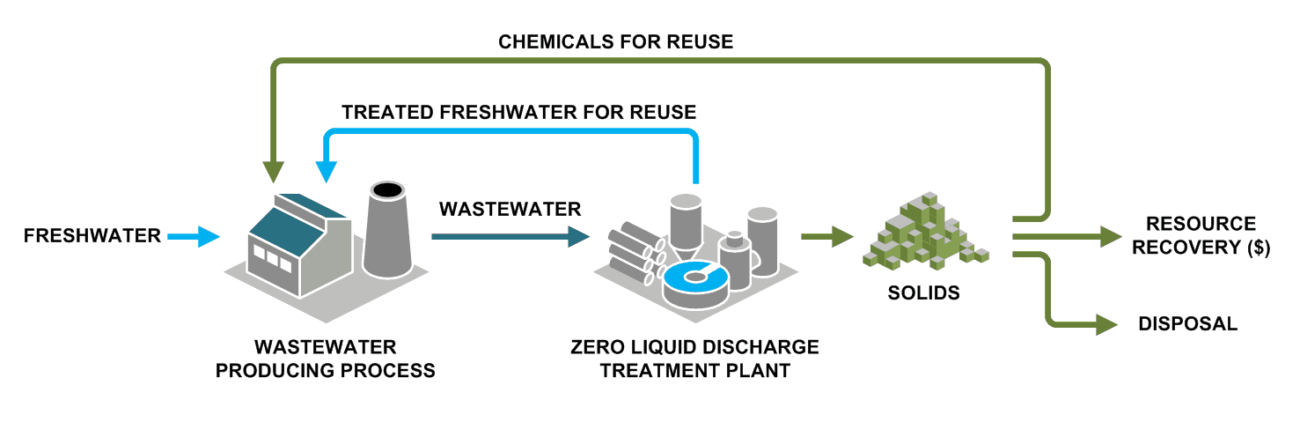
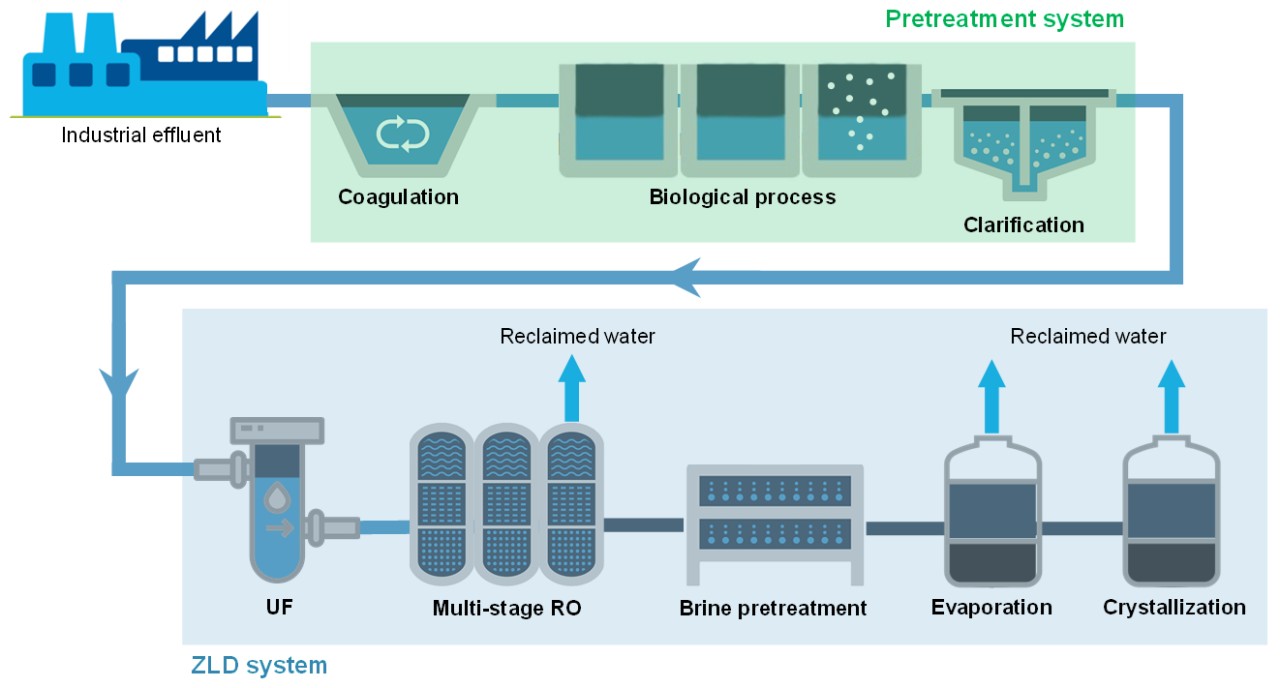
A zero discharge plant, also known as a zero liquid discharge (ZLD) plant, is an industrial facility that treats wastewater to eliminate liquid waste. The treated water is then recycled and reused, and the solid waste is disposed of or repurposed.
How it works
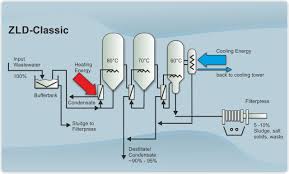
- Treatment: Wastewater is treated using advanced technologies like filtration, evaporation, crystallization, and biological treatments.
- Recovery: The treated water is recovered and reused for industrial processes.
- Disposal: The solid waste is disposed of in a solid waste disposal facility, such as a landfill.
Benefits
- Reduces water consumption
ZLD systems can help companies reduce their water consumption and disposal costs.
- Avoids environmental impacts
ZLD systems can help companies avoid adverse environmental impacts associated with wastewater discharge.
- Recovers valuable byproducts
ZLD systems can recover valuable byproducts from waste, such as salts and brines.
Uses
- ZLD plants are used in industries such as textiles, chemicals, power generation, pharmaceuticals, and food processing.
- ZLD systems can also be used for brine management in inland desalination plants.